


การตรวจหาสารก่อภูมิแพ้ในกระบวนการผลิตอาหาร
By: Panida Pisaisawat
Regional Technical Support Manager
Hygiena International Limited
ppisaisawat@hygiena.com


การแพ้อาหาร จัดเป็นปัญหาสำคัญด้านสุขภาพที่ส่งผลกระทบต่อประชากรทั่วโลกกว่าร้อยละ 2.5
ซึ่งภาวะการแพ้อาหาร นอกจากจะส่งผลกระทบต่อสุขภาพแล้ว ยังส่งผลต่อภาคเศรษฐกิจอีกด้วย ประเทศต่างๆ จึงให้ความสำคัญในการจัดการและควบคุมอาหารก่อภูมิแพ้มากขึ้น รวมถึงผู้ผลิตที่มีความเสี่ยงต่อการปนเปื้อนสารก่อภูมิแพ้ต้องมีการจัดทำโปรแกรมเพื่อควบคุมสารก่อภูมิแพ้ในกระบวนการผลิตอย่างเหมาะสม
การทดสอบสารก่อภูมิแพ้ในอาหาร นอกจากจะวิเคราะห์เพื่อตรวจสอบปริมาณที่พบในผลิตภัณฑ์แล้ว อาจทดสอบในวัตถุประสงค์ที่แตกต่างกันออกไป ดังนี้
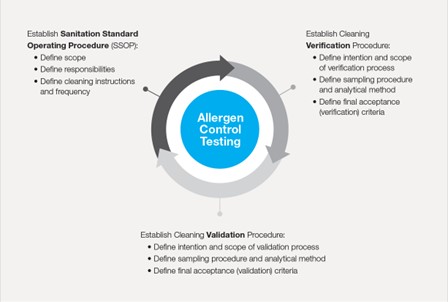
การทดสอบเพื่อพิสูจน์ประสิทธิภาพในขั้นตอนการทำความสะอาด
วิธีทดสอบที่ใช้ในการพิสูจน์นี้ ควรมีค่าปริมาณต่ำสุดที่ชุดทดสอบสามารถวิเคราะห์ได้ (Limit of Detection; LOD) และค่าปริมาณต่ำสุดที่ชุดทดสอบสามารถรายงานค่าเป็นตัวเลขได้ (Limit of Quantitation; LOQ) เพื่อให้ตรงกับเกณฑ์ของประเทศคู่ค้า จึงมักทดสอบด้วยเครื่องมือเฉพาะโดยผู้ชำนาญการในห้องปฏิบัติการที่ผ่านการรับรองมาตรฐาน โดยมีเทคนิคในการวิเคราะห์ที่หลากหลาย เช่น
1. เทคนิค Enzyme-linked Immunosorbent Assay (ELISA) เป็นการทดสอบโดยอาศัยปฏิกิริยาจำเพาะระหว่างแอนติเจน (สารก่อภูมิแพ้) และแอนติบอดี โดยอ่านผลจากสีที่เปลี่ยนไปด้วยสายตาหรือเครื่องอ่านไมโครเพลท
2. เทคนิค Polymerase Chain Reaction (PCR) เป็นวิธีการตรวจสอบหา DNA เป้าหมายที่มีความจำเพาะและมีความไวสูงด้วยเครื่อง PCR หรือ Real-time PCR
การทดสอบเพื่อทวนสอบประสิทธิภาพหลังการทำความสะอาด
หลังจากการทำความสะอาดในไลน์การผลิตที่มีความเสี่ยงต่อการตกค้างของสารก่อภูมิแพ้ที่ไม่สามารถตรวจสอบด้วยสายตาได้ จึงจำเป็นต้องมีการทวนสอบประสิทธิภาพของการล้างทำความสะอาด (Verification) โดยมีเทคนิคที่นิยมใช้ ได้แก่
1. เทคนิค Adenosine Tri-Phosphate (ATP) เป็นเทคนิคที่ง่ายและรวดเร็ว ใช้เพื่อตรวจสอบประสิทธิภาพการทำความสะอาดจากการวัดปริมาณ ATP ซึ่งพบได้ในสารอินทรีย์ เศษอาหาร และโปรตีน
2. เทคนิคการตรวจหาโปรตีน เป็นการตรวจหาโปรตีนตกค้างบนพื้นผิวด้วยปฏิกิริยาไบยูเร็ต ซึ่งหาก Swab และทำปฏิกิริยาแล้วเกิดเป็นสีม่วง แสดงว่ามีโปรตีนตกค้างอยู่บนพื้นผิวนั้น
3. เทคนิค Lateral Flow Device (LFD) เป็นการทดสอบหาสารก่อภูมิแพ้แบบแยก เช่น กลูเตน ไข่ เป็นต้น อาศัยหลักการที่แอนติเจนจับกับแอนติบอดีอย่างจำเพาะ
การทดสอบหรือทวนสอบหาสารก่อภูมิแพ้ด้วยวิธีที่เหมาะสม ถูกต้อง และแม่นยำในกระบวนการผลิต ตลอดจนการทดสอบในผลิตภัณฑ์สุดท้ายมีความสำคัญอย่างมากที่จะช่วยลดอันตรายที่อาจเกิดกับผู้บริโภค ทั้งยังช่วยหลีกเลี่ยงค่าใช้จ่ายที่อาจเกิดขึ้นจากการเรียกคืนผลิตภัณฑ์ และลดความล่าช้าในการตรวจปล่อยผลิตภัณฑ์ออกสู่ตลาดได้อีกด้วย
Food allergy is a major health issue that affects more than 2.5 percent of the world’s population. Food allergy does not only have adverse effects on health, but it also has economic implications. Likewise, food producers that run the risk of food allergen contamination must devise a proper control program to control allergens in their food manufacturing processes.
Food allergen testing does not only analyse the amount of allergens in foods, but it can also be implemented and adapted to suit different purposes as follows:
Effectiveness Validation Test of Cleaning Measurement
The testing methods used in this validation should comprise the limit of detection (LOD) and limit of quantitation (LOQ) that are in line with trade partners’ regulations. Special tools are, therefore, required and must be handled by qualified experts in a certified standard laboratory that can offer a diverse array of analysis techniques such as the following:
1. Enzyme-linked Immunosorbent Assay (ELISA) relies on a specific reaction of an antigen (allergen-inducing substance) and an antibody. The result is carried out the color changes either through visual reading or a microplate reader detection.
2. Polymerase Chain Reaction (PCR) looks for a target DNA that has high specificity and sensitivity via PCR or real-time PCR technique.
Effectiveness Verification Test of Post-cleaning
Once the disinfection of a potentially contaminated production line, which may still harbors some visually undetectable traces of contamination, is finished, the effectiveness of cleaning processes must be verified. The techniques commonly used in food plants are as follows:
1. Adenosine Tri-Phosphate (ATP) is a rapid and easy technique that helps verify the effectiveness of cleaning process through the detection of ATP in organic substances, food leftovers, and proteins.
2. Protein Detection Technique relies on biuret reaction to find remaining protein residues on the surface. A swab that turns purple is a sign of protein reaction, which means that there still are some protein residues left on the surface.
3. Lateral Flow Device (LFD) is a technique for detecting specific allergens, such as gluten or egg. Based on the antigen binding specificity of individual antibodies.
The validation and verification of allergen testing are necessary to ensure optimum adequacy, accuracy, and precision. Carrying out these tests in both manufacturing process and final product are an important solution to minimize potential food hazards that may befall consumers, curb additional costs derived from product recalls, and lower the possibility of delay in product launch into the market.