
จากผลพลอยได้ทางการเกษตรสู่ทรัพยากรที่ซ่อนคุณค่าในอาหารมูลค่าสูง

ในอดีต วัสดุเหลือทิ้งจากกระบวนการผลิตทางการเกษตรและการแปรรูปอาหารมักถูกมองว่าเป็น “ของเสีย” เช่น รำข้าว เปลือกหุ้มเมล็ดถั่ว เปลือกผลไม้ กากเมล็ดพืชน้ำมัน รวมถึงเศษเหลือทิ้งจากอุตสาหกรรมประมงและวัตถุดิบจากพืช วัสดุเหล่านี้มักถูกนำไปใช้เป็นอาหารสัตว์ ทิ้ง หรือจำหน่ายในมูลค่าต่ำ อย่างไรก็ตาม แนวคิดดังกล่าวกำลังเปลี่ยนแปลงไปอย่างมีนัยสำคัญ เนื่องจากเริ่มมีการตระหนักว่าวัสดุเหลือใช้เหล่านี้ยังคงมีคุณค่าซ่อนที่อยู่ ทั้งในด้านสารอาหาร องค์ประกอบเชิงหน้าที่ และสารออกฤทธิ์ทางชีวภาพที่สามารถนำไปใช้ประโยชน์ต่อยอดได้ในหลากหลายอุตสาหกรรม
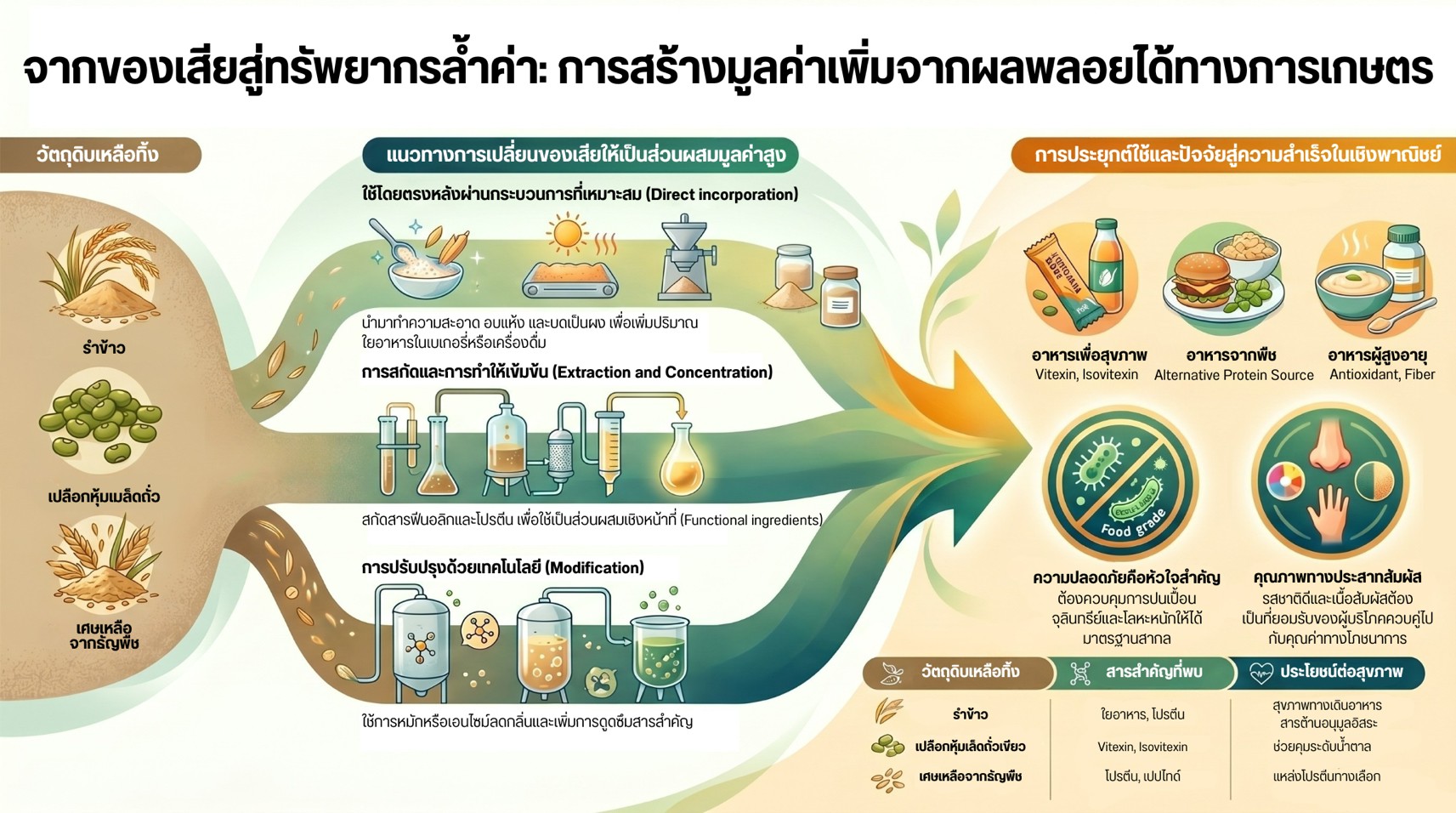
การใช้ประโยชน์จากผลพลอยได้ทางการเกษตรสามารถทำได้หลายแนวทาง โดยแนวทางที่ง่ายที่สุดคือการนำผลพลอยได้มาใช้โดยตรงหลังจากผ่านกระบวนการที่เหมาะสม เช่น การทำความสะอาด การทำแห้ง การบด และการทำให้คงตัว ตัวอย่างเช่น ผงที่มีใยอาหารสูงจากรำข้าว เปลือกหุ้มเมล็ดหรือเปลือกผลไม้ ยังสามารถนำไปใช้ในผลิตภัณฑ์เบเกอรี ขนมขบเคี้ยว เส้นก๋วยเตี๋ยว เครื่องดื่ม หรืออาหารกึ่งสำเร็จรูปได้ สำหรับผลพลอยได้จากธัญพืชและถั่ว เช่น รำข้าว รำข้าวหลังการสกัดน้ำมัน เปลือกถั่วเขียว และส่วนถั่วเขียวแตก การนำมาใช้โดยตรงอาจช่วยเพิ่มปริมาณใยอาหารและคุณค่าทางโภชนาการของผลิตภัณฑ์ได้ หากสามารถควบคุมกลิ่นรส สี และเนื้อสัมผัสให้เหมาะสม
ผลพลอยได้ทางการเกษตรเป็นทรัพยากรที่มีศักยภาพสูงสำหรับการพัฒนาส่วนผสมเชิงหน้าที่ สารเติมแต่งจากธรรมชาติ และผลิตภัณฑ์อาหารเพื่อสุขภาพ โดยเฉพาะในประเทศไทยที่มีวัตถุดิบเหล่านี้อยู่เป็นจำนวนมาก หากมีการแปรรูปที่เหมาะสม การควบคุมความปลอดภัย และการประเมินคุณสมบัติทางวิทยาศาสตร์อย่างเป็นระบบ วัตถุดิบที่ยังใช้ประโยชน์ได้ไม่เต็มที่จะสามารถสร้างมูลค่าเพิ่มได้ตลอดห่วงโซ่อาหาร ดังนั้น การใช้ประโยชน์จากผลพลอยได้จึงไม่ควรจำกัดอยู่เพียงการลดของเสียเท่านั้น แต่ควรมุ่งสู่การพัฒนาผลิตภัณฑ์อาหารที่ดีต่อสุขภาพและมีความยั่งยืนมากยิ่งขึ้น
By:
Assoc. Prof. Sudathip Sae-tan, Ph.D.
Department of Food Science and Technology
Faculty of Agro-Industry
Kasetsart University
sudathip.sa@ku.th
In the past, many materials left after agricultural and food processing were simply called “waste.” Rice bran, legume seed coats, fruit peels, oilseed meals, and residues from fish or plant-based industries were often used as animal feed, discarded, or sold at low value. However, today, these materials are increasingly recognized as hidden resources that may contain valuable nutrients, functional components, and bioactive compounds.
There are several approaches for utilizing agricultural by-products. The simplest approach is direct incorporation after appropriate cleaning, drying, milling, and stabilization. For example, fiber-rich powders from bran, seed coats, or fruit peels may be added to bakery products, snacks, noodles, beverages, or instant foods. In the case of cereal and legume by-products, such as rice bran, defatted rice bran, mung bean seed coat, and broken mung bean fractions, direct incorporation may help improve the dietary fiber content and nutritional value, if flavor, color, and texture are properly controlled.
Agricultural by-products have strong potential for the development of functional ingredients, natural additives, and health-oriented food products, particularly in Thailand where these materials are widely available. With proper processing, safety control, and systematic scientific evaluation, underutilized materials can create value throughout the food chain. Therefore, by-product utilization should extend beyond waste reduction and contribute to the development of healthier and more sustainable food products.