Food FocusThailand
NOVEMBER 2015
18
(ใหญ่
กว่
าประเทศบรู
ไนมาก) เพื่
อเป็
นแหล่
งผลิ
ตอาหารป้
อนตลาดภายใน
บรู
ไนเป็
นหลั
ก แต่
ในความเป็
นจริ
งแล้
วบรู
ไนคงมี
เป้
าหมายที่
ใหญ่
กว่
านั้
น
บรู
ไนเป็
นประเทศผู
้
ผลิ
ตน�้
ำมั
นเช่
นเดี
ยวกั
บประเทศในตะวั
นออกกลาง
(ซึ่
งต้
องน�
ำเข้
าอาหารเช่
นกั
น) และมี
ความใกล้
ชิ
ดกั
บประเทศโลกมุ
สลิ
ม
อี
กทั้
งบรู
ไนเองก็
ต้
องการสร้
างความหลากหลายทางเศรษฐกิ
จนอกสาขา
น�้
ำมั
นอี
กด้
วยดั
งนั้
นการพั
ฒนาอาหารแบรนด์
ฮาลาลบรู
ไนจึ
งเป็
นนโยบาย
หลั
กของบรู
ไนในการเจาะตลาดอาหารฮาลาลโลกที่
มี
ประชากรมุ
สลิ
ม
ถึ
ง 1,600ล้
านคน
ออสเตรเลี
ยเป็
นประเทศ 1 ใน 10 อั
นดั
บแรกของโลกที่
นั
กลงทุ
นจาก
ต่
างประเทศเลื
อกที
่
จะเข้
าไปลงทุ
น ส่
วนหนึ่
งเป็
นการลงทุ
นด้
านเกษตร
ในช่
วงปี
2550-2557การลงทุ
นด้
านการเกษตรจากต่
างประเทศในออสเตรเลี
ย
มี
มู
ลค่
า 12.6 พั
นล้
านเหรี
ยญออสเตรเลี
ย (คิ
ดเป็
นร้
อยละ 1.5 ของมู
ลค่
า
การลงทุ
นจากต่
างประเทศในออสเตรเลี
ยทั้
งหมดซึ่
งมี
มู
ลค่
า844.8พั
นล้
าน
เหรี
ยญออสเตรเลี
ย) โดยอั
นดั
บ 1 เป็
น แคนาดา (ร้
อยละ 24.8) อั
งกฤษ
(ร้
อยละ 21.6) สหรั
ฐอเมริ
กา (ร้
อยละ 11.8) และนิ
วซี
แลนด์
(ร้
อยละ 4.3)
และตั้
งแต่
ปี
2555สหรั
ฐอาหรั
บเอมิ
เรตส์
และจี
นได้
ก้
าวขึ้
นมาเป็
นประเทศ
ผู้
ลงทุ
นด้
านการเกษตรรายใหม่
ที่
ส�
ำคั
ญของออสเตรเลี
ย
ปั
จจุ
บั
นต่
างชาติ
ถื
อครองที่
ดิ
นเพื่
อการเกษตรในออสเตรเลี
ยร้
อยละ12
อย่
างไรก็
ตามที่
ดิ
นที่
มี
ชาวต่
างชาติ
เป็
นเจ้
าของเพิ่
มขึ้
นจาก45ล้
านเฮกตาร์
ในปี
2553 เป็
น 50 ล้
านเฮกตาร์
ในปี
2556 ส่
วนใหญ่
เป็
นที่
ดิ
นในรั
ฐ
ควี
นสแลนด์
และรั
ฐนอร์
ทเทิ
ร์
นแทริ
ทอรี่
โดยต่
างชาติ
สามารถเช่
าที่
ดิ
นได้
ยาวนานถึ
ง 99 ปี
ปั
จจุ
บั
นมี
บริ
ษั
ทต่
างชาติ
45 บริ
ษั
ทครอบครองพื้
นที่
การเกษตร (Farmland)ในออสเตรเลี
ยส่
วนใหญ่
ใช้
ในการเลี้
ยงแกะโคเนื้
อ
และปลู
กธั
ญพื
ช
has a close relationship with the Muslim
world. Its aim to diversify national industries
makesBrunei’sHalalbrandcrucial toaccess
global Halal food demand of 1,600 million
consumers.
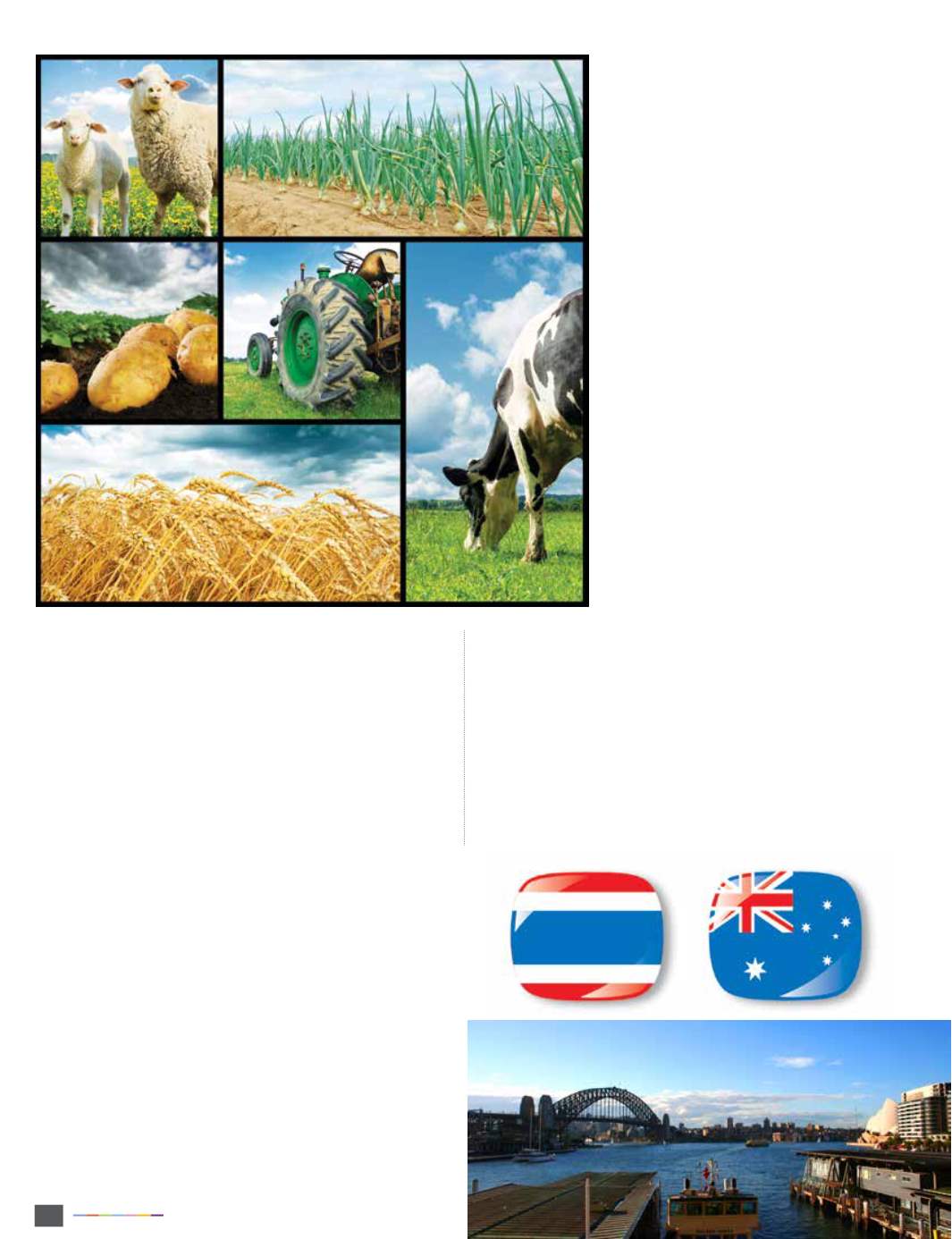
Australia is one of the top 10 most
attractive countries for FDI, especially in
agriculture. Between 2007 to 2014, foreign
investment inagriculture inAustralia reached
AUD 12.6 billion (accounting for 1.5% of all
investment ofAUD844.8billion toAustralia).
Canada is the biggest investor (24.8%),
followed by Great Britain (21.6%), United
States (11.8%) and New Zealand 94.3%).
Since 2012, the United Arab Emirates and
Chinahavealsobecome twomostagriculture
related investors inAustralia.
Presently, foreign investors own roughly
12% of all land for agricultural purpose in
Australia.However, landsownedby foreigners
have increased from 45 million hectares in
2010 to 50million hectares in 2013, mostly
inQueenslandandNorthernTerritory.Foreign
investors can rent lands up to99 years, and
so far, 45 foreign companies own farmland
in Australia, mostly for sheep, cattle and
grains cultivations.
China has also invested inAustralia for
sheep cattle and livestock to export back to
the local market. Each year, China imports
over 110,000 sheep from Australia. For
grains, after the Australian government has alleviated market
regulations andgrainexport agreement in2008, foreign investors
showed interest. In2009-2010,US’sCargill andSwiss’sGlencore
invested in Australia and owned market share of grain 18% and
16% respectively. Sumitomo bought shares from Emerald Grain,
the fifth largest grain trader in Australia, and Mitsui also bought
shares fromPlumGrove to trade in Japan, Chinaandother South
EastAsian countries.Agricultural goods, such as beef, lamb, and
grainsareeligible for taxand tariffexemptionunder theFreeTrade
AgreementbetweenAustraliaandmanycountries, includingASEAN
andChina. It isnosurprise that foreign investorsarekeen to invest
more inAustralia, despitehighminimumwage, as the countryhas
exuberant fields that helps save animal fodder costs.


